
Why an Unlevel HVAC Condenser Is a Big Problem in Central Texas
As a Central Texas home inspector, one of the more common defects we’re seeing right now is unlevel HVAC condenser units. Expansive clay soil, poor pad prep, and settling ground cause outdoor AC and heat pump units to tilt. That small lean can create big mechanical problems.
If your condenser isn’t level, it isn’t just cosmetic, it’s a performance and lifespan issue.
How an Unlevel Condenser Damages Your HVAC System
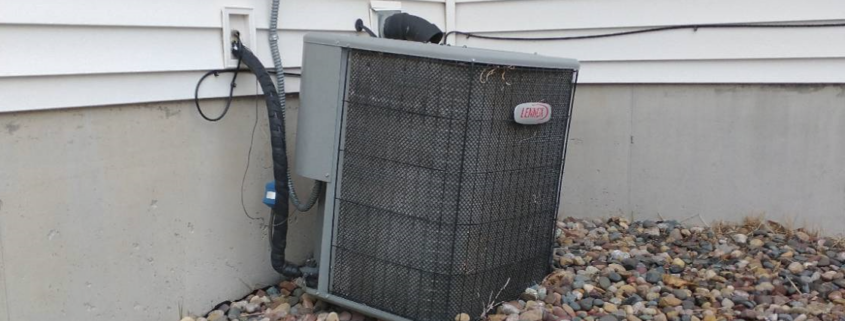
An example of an unlevel outdoor condenser unit: the pad has sunk on one side, causing the unit to tilt.
1. Compressor oil starvation
The compressor is the heart of your air conditioner. It relies on oil mixed with refrigerant to lubricate internal components. When a condenser is tilted, that oil can pool away from where it’s needed. That causes metal-on-metal wear, overheating, and premature compressor failure: one of the most expensive repairs a homeowner can face.
2. Poor refrigerant flow
An uneven unit disrupts how refrigerant flows through the condenser coil. Liquid can collect in low spots, causing inefficient cooling, pressure problems, and even liquid refrigerant entering the compressor — a condition known as liquid slugging, which can destroy compressors.
3. Vibration, noise, and cracked lines
When the unit isn’t evenly supported, the fan and compressor run slightly out of alignment. This leads to excess vibration, rattling, and buzzing. Over time, that vibration can loosen fasteners and fatigue copper refrigerant lines causing leaks that are costly to repair.
4. Drainage and freezing issues (heat pumps)
Heat pumps defrost in winter by melting ice into a drain pan. If the unit isn’t level, water can pool instead of draining. That water refreezes, leading to ice buildup, blocked airflow, and damaged coils or fan blades.
What Code and Manufacturers Require
Installation standards based on the International Residential Code (IRC) and manufacturer guidelines require outdoor HVAC units to be:
Installed on a stable pad
Elevated above grade
Level within ±2°
This ensures proper lubrication, drainage, and mechanical operation.
How Unlevel Condensers Are Fixed
In Central Texas, repairs often include:
Shimming and re-leveling the pad for minor settling
Installing a new concrete or composite pad when cracking or sinking occurs
Using rubber isolation pads to fine-tune leveling and reduce vibration
Stabilizing the soil with gravel bases or foam injection when clay soil keeps shifting
Bottom Line
An unlevel condenser doesn’t just look bad — it shortens equipment life, increases energy use, and leads to expensive failures. During a home inspection, this is a defect that should always be flagged and corrected.
If your AC unit is leaning, it’s time to fix it — before it costs you a compressor.