
Why Texas Attics Turn Into Heat Traps
Texas homeowners do not need a roof leak for the attic to become a major problem. During hot weather, attic temperatures can climb to 130°F or even 140°F. When ventilation is poor, that heat has nowhere to go, and the attic can become one of the biggest comfort and efficiency problems in the home.
As temperatures start heating up across Texas, now is a smart time to understand what is happening above the ceiling. A poorly performing attic can affect energy bills, HVAC performance, roof life, and moisture control.
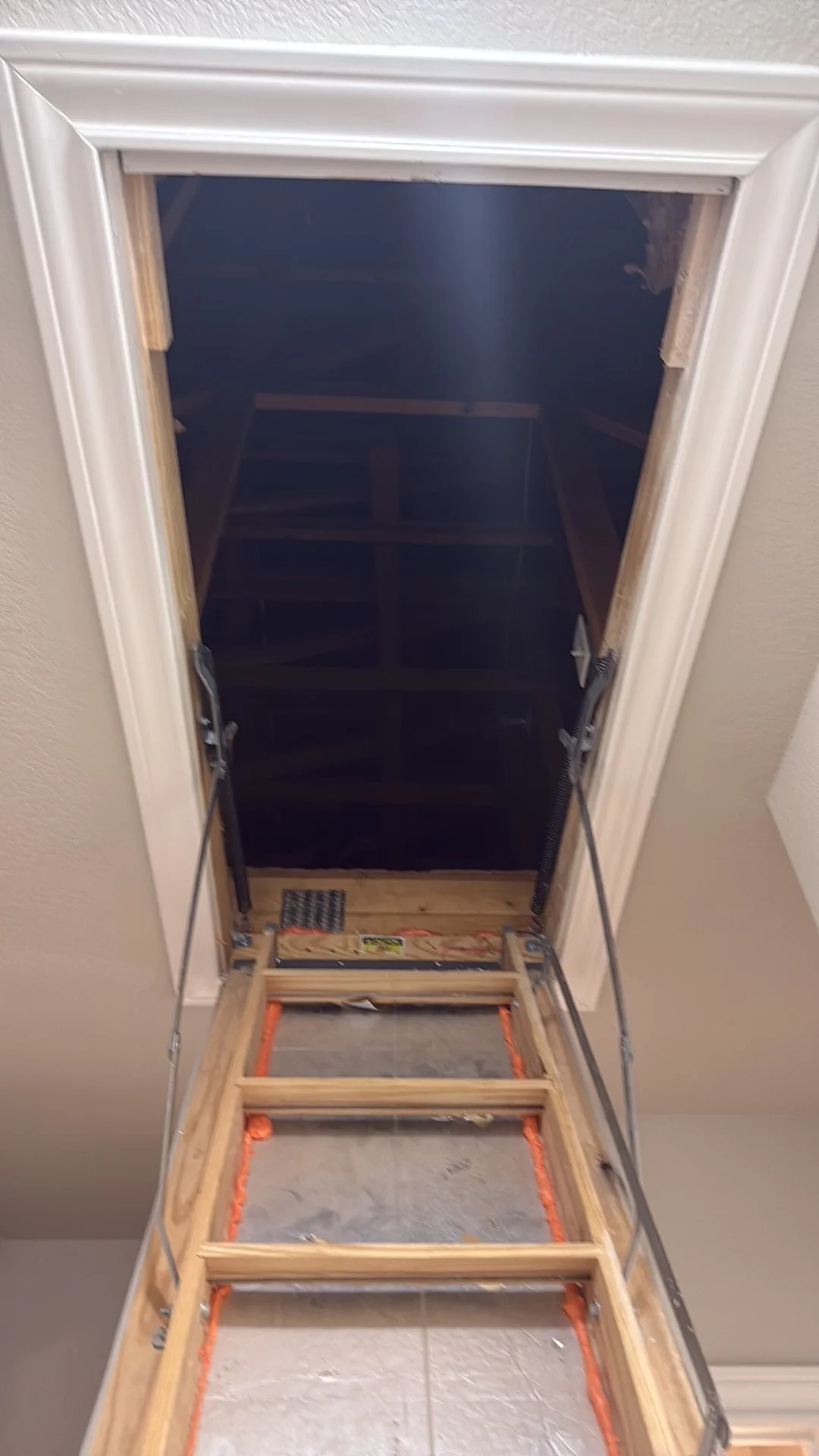
No insulation on attic access hatch
Common Attic Problems in Texas
One of the most common issues is inadequate insulation. Insulation helps slow heat transfer between the attic and the living space below. When there is not enough insulation, heat moves more easily through the ceiling, causing rooms to feel warmer and the air conditioner to run longer.
Another common issue is blocked ventilation. In many attics, insulation gets pushed into the soffit areas near the roof edge. This can block intake vents and prevent fresh air from entering the attic. A vented attic needs balanced airflow: air should enter low through the soffits and exit high through ridge vents, roof vents, or other exhaust vents.
Attic access points are another weak spot. Pull-down stairs, attic hatches, and access panels are often left uninsulated or poorly sealed. Even if the rest of the attic has decent insulation, an uninsulated attic access can act like a gap in the home’s thermal boundary.
Texas Insulation Requirements
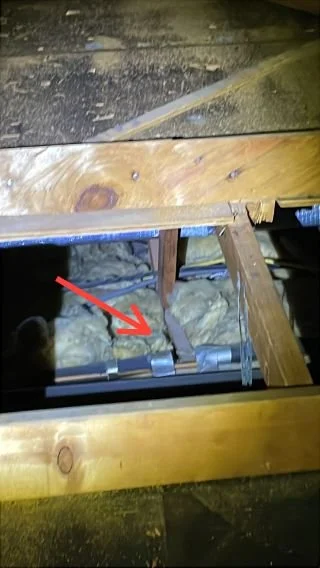
Insufficient Insulation: Given the framing joists can be seen, the insulation is under 6 inches deep
Texas homeowners should know that “some insulation” does not always mean “enough insulation.” Under Texas’ statewide 2015 IRC energy provisions, attic or ceiling insulation is generally R-38 in climate zones 2 and 3 and R-49 in climate zone 4. Some local jurisdictions may require more, and newer standards often call for higher attic insulation levels.
Since blown-in insulation is common in Texas attics, homeowners can usually think in terms of approximate depth. R-38 is often around 12 to 14 inches of blown-in fiberglass or about 10 to 12 inches of blown-in cellulose. R-49 is commonly around 16 to 18 inches of blown-in fiberglass or about 13 to 15 inches of blown-in cellulose. Exact depth depends on the product, density, and manufacturer, but if you can clearly see ceiling joists across much of the attic, the insulation level may be too low.
For many Central Texas homes, including New Braunfels, San Antonio, Austin, San Marcos, Kyle, and Buda, inadequate attic insulation is a common finding. Older homes may have insulation that was acceptable when built but falls short of current expectations. Insulation can also be moved, compressed, damaged, or disturbed over time.
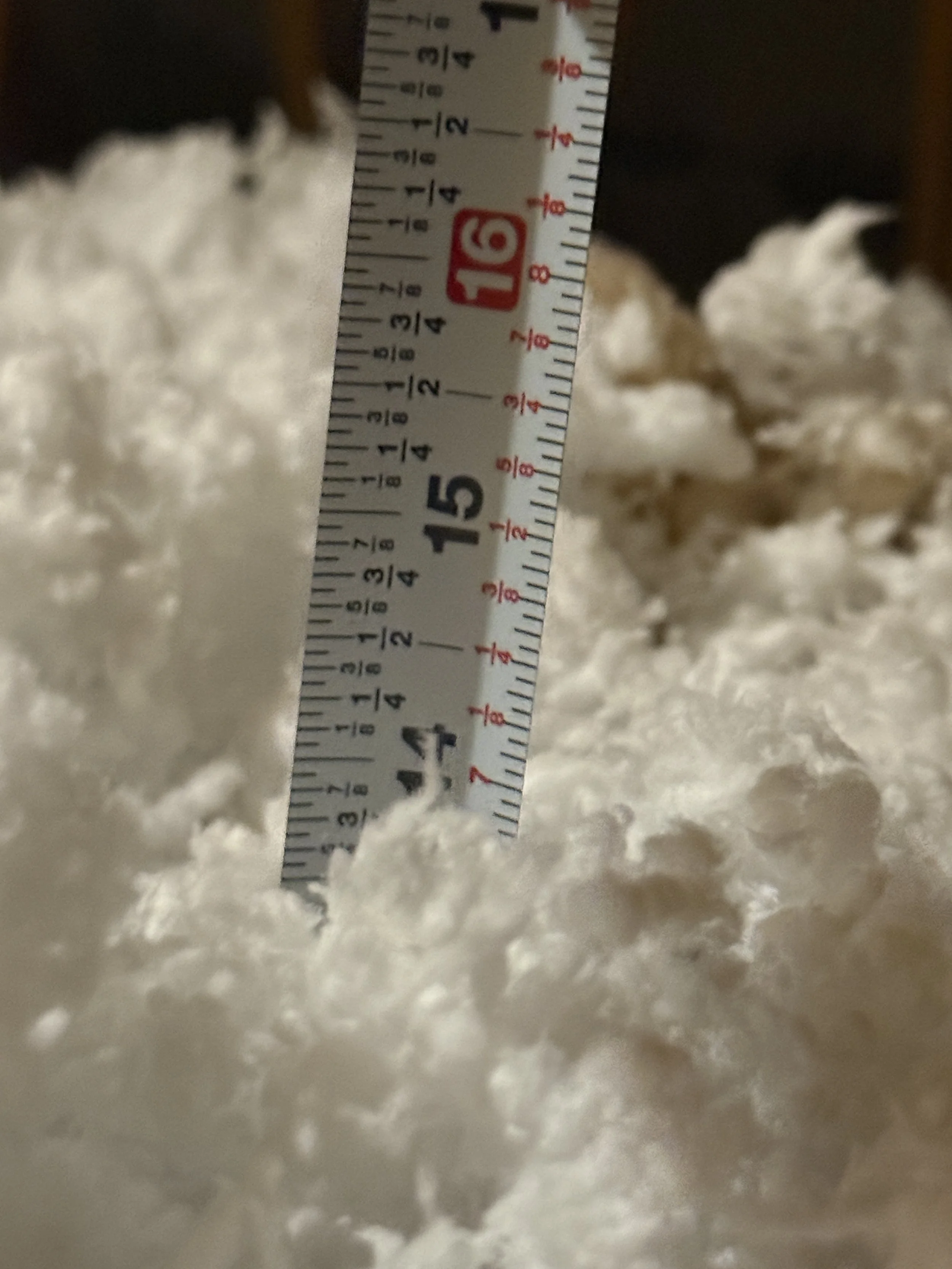
Proper insulation depth; about 14 inches
Why It Matters
A hot, poorly insulated attic can raise cooling costs. When heat pushes down into the living space, the HVAC system has to work harder to maintain the thermostat setting. If ductwork or air handlers are located in the attic, the system may also lose efficiency because it is operating in an extremely hot environment.
That extra strain can shorten HVAC life. Air conditioners are already working hard during Texas summers. Poor attic performance adds to that workload, leading to longer run times, higher energy use, and more wear on equipment.
Poor attic ventilation can also affect the roof. Excessive heat buildup can contribute to premature aging of shingles and roof decking. Moisture is another concern. Ventilation helps remove humid air from the attic, which can reduce the risk of condensation, damp insulation, and mold-related concerns.
What Homeowners Should Check
Start by looking at insulation depth. A shallow, uneven, or disturbed layer of blown-in insulation is a red flag. Next, check the soffit areas. If insulation is packed tightly against the roof edge, airflow may be blocked and baffles may be needed.
Also check the attic hatch or pull-down stair cover. It should be weatherstripped, air sealed, and insulated to perform more like the surrounding ceiling area.
Pro Tip: Think of the Attic as a System
Attic ventilation and insulation work together. Adding insulation without maintaining airflow can create new problems. Adding vents without enough insulation will not solve the heat transfer issue. A balanced attic system includes proper air sealing, adequate insulation, clear intake vents, and effective exhaust ventilation.
The bottom line: a well-balanced attic helps improve comfort, control energy costs, reduce moisture concerns, and extend the life of both the roof and HVAC system. For Texas homeowners, one of the smartest places to improve the home is not always inside the living room. Sometimes, it is right above the ceiling.