
Foundation Movement from Expansive Clay Soil in Central Texas
Central Texas soil comes first
In Central Texas, foundation movement is often a soil-and-moisture problem before it is a concrete problem. Across Austin, San Antonio, Waco, Killeen, Round Rock, and Georgetown, many homes sit on clay-rich ground that swells after rain and shrinks during hot, dry stretches. Along and east of the I‑35 corridor, Blackland Prairie clays are especially reactive, while transition areas with limestone and thinner soils still create major drainage and moisture-management challenges.
Why expansive clay moves foundations
Expansive clay changes volume with moisture. When the soil wets up, it expands and pushes on slabs, grade beams, and shallow foundations. When drought, tree roots, poor grading, or plumbing leaks change moisture unevenly, the soil contracts and support becomes uneven. That is why Central Texas movement is usually differential rather than perfectly uniform.
Signs Central Texas homeowners should watch
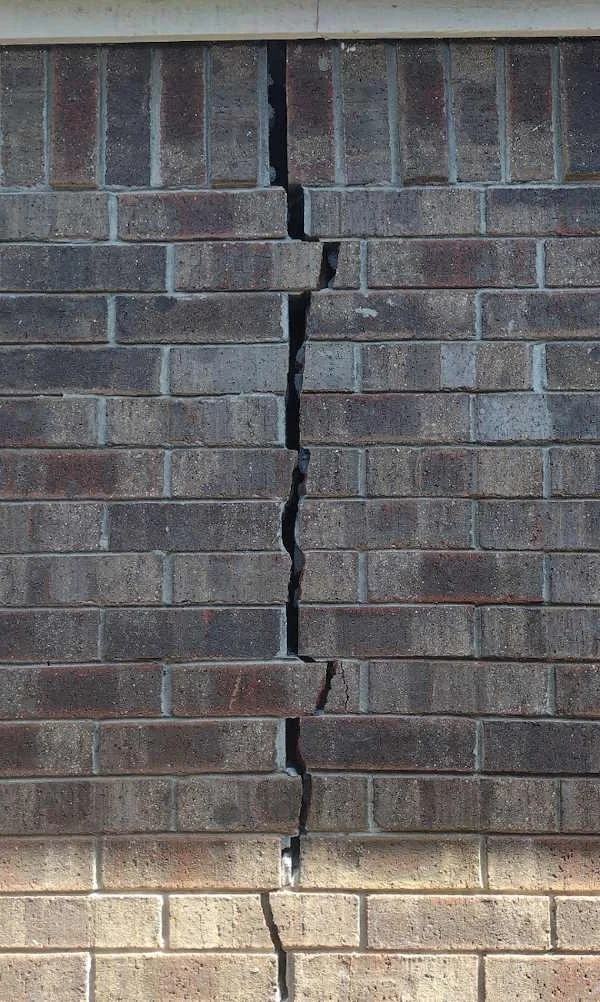
The most common warning signs are stair-step brick cracks, drywall cracks near doors and windows, uneven floors, sticking doors or windows, trim separation, and gaps around frames. A single hairline crack does not automatically mean the foundation is failing. The better inspection rule is to look for patterns, not isolated defects: multiple symptoms in the same zone, cracks that widen or come back after patching, displacement across a crack, or interior and exterior symptoms that line up.
Why it matters
Some movement is normal in Texas clay soils, but adverse movement can turn cosmetic distress into functional and safety issues. Doors stop latching, masonry shifts, floor elevation changes create trip hazards, and plumbing can be stressed as the slab moves. It also matters at resale: Texas seller-disclosure rules require disclosure of material facts and the property’s physical condition, so known foundation concerns can become a real transaction issue.
Repair options and rough Central Texas cost ranges
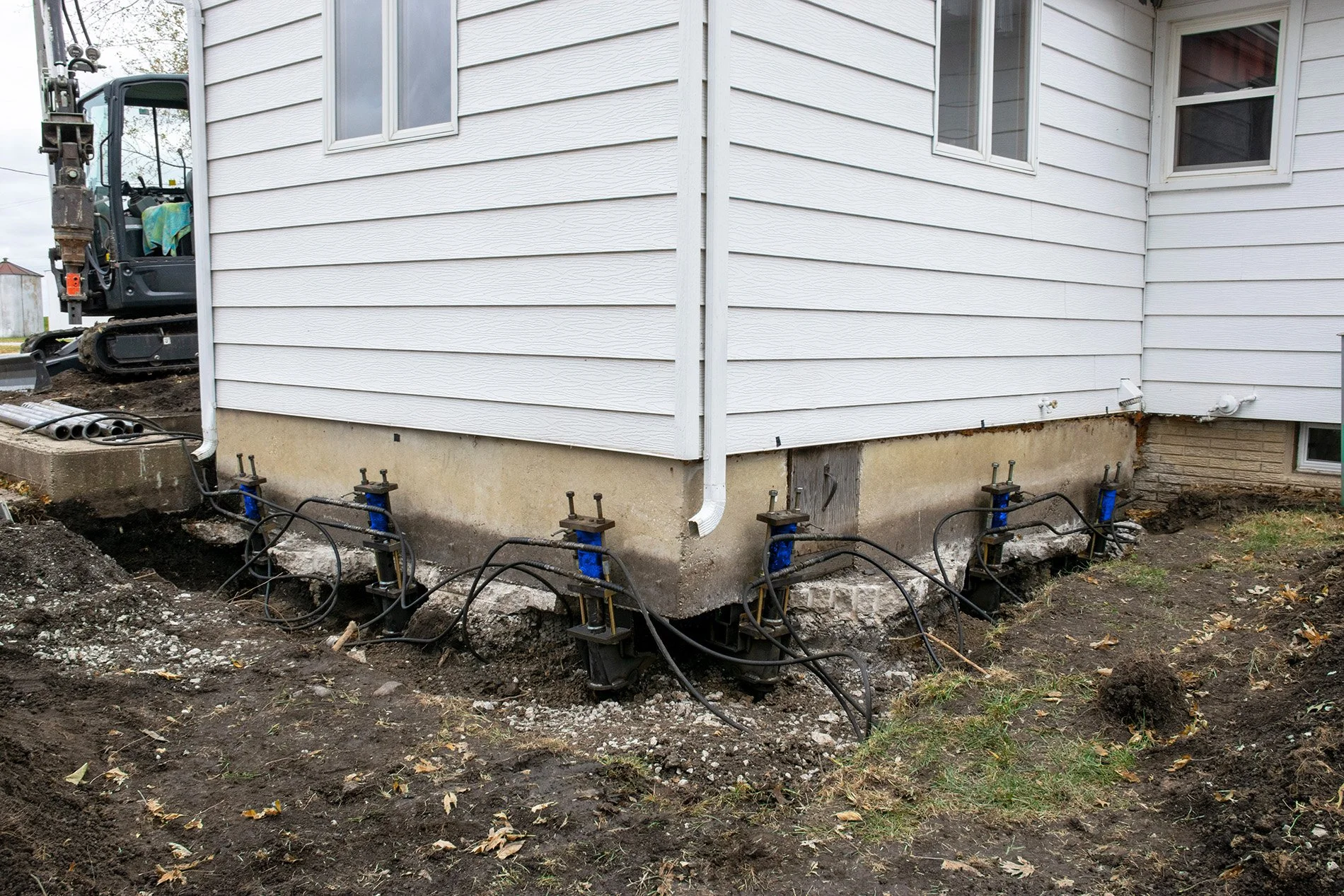
The right repair depends on cause, foundation type, and severity. Minor stable cracking may only need monitoring and crack repair. Common regional ranges are about $500 to $1,500 for minor crack repair, about $1,000 to $3,000 for slab jacking or mudjacking for localized leveling, and roughly $1,000 to $4,000 per pier for underpinning systems. Many residential repairs land around $3,500 to $12,000, while major structural work can run $10,000 to $40,000 or more. Some San Antonio slab projects are quoted even more broadly at $5,000 to $35,000. Treat those as rough ranges, not quotes: drainage corrections, plumbing repair, access, and warranty terms can change the number fast.
Inspection and prevention tips for homeowners
Start your inspection with a slow walk around the exterior and then through the interior. Outside, look for recurring brick cracks, soil pulling away from the slab, standing water, negative grading, and downspouts that dump next to the house. Inside, note whether floor slope, drywall cracking, and door or window misalignment show up in the same part of the home. Call a qualified foundation professional or structural engineer when signs cluster, worsen over time, or appear after a strong wet-dry weather swing.
For prevention, focus on moisture consistency rather than aggressive watering on one side of the house. Keep gutters clear, extend downspouts away from the foundation, correct drainage where water ponds, repair plumbing leaks quickly, and watch large trees if roots are drying soil unevenly. Finally, document cracks with dated photos and check them seasonally. In Central Texas, early pattern recognition is usually cheaper than delayed structural repair.