
Termites in Texas: A Homeowner’s Guide to Identification, Prevention, and Professional Treatment
Termites in Texas are a routine structural-pest concern, not a reason to panic. The state’s most common pest termites are subterranean species in the genus Reticulitermes, which live in soil and can enter buildings without being obvious from inside the living space. Texas A&M notes that subterranean termites occur throughout Texas and are more prevalent in coastal regions, while Formosan and drywood termites are important in some areas, especially near the Gulf Coast. Because termite activity is often concealed behind finishes, beneath slabs, or inside wood, early clues may be limited to mud tubes, discarded wings, indoor swarmers, or damaged wood. For homeowners searching for signs of termites in Texas homes, the most useful approach is to understand how termites reach structures, what conditions support them, and when a professional inspection or treatment is justified.
How Termites Enter Homes
For most Texas homeowners, the main concern is subterranean termites. Unlike drywood termites, subterranean species establish colonies associated with soil and depend heavily on moisture. Workers leave the colony to search for cellulose-containing materials such as wood, paper, and other plant-derived products. When they find a structure, they can enter anywhere that provides a protected path from soil to a food source.
The most straightforward route is wood-to-soil contact. Wooden siding, porch components, fence attachments, landscape timbers, form boards, or other cellulose materials that touch the ground can give termites concealed access to a building. Texas A&M identifies wood in direct contact with soil as a high-risk condition and recommends keeping soil, debris, and stacked wood away from the foundation.
Termites can also reach aboveground wood by constructing shelter tubes, commonly called mud tubes. Workers make these enclosed passageways from soil, wood particles, debris, and secretions. The tubes help protect termites from dehydration, temperature extremes, and predators while allowing them to travel between the soil and structural wood. Tubes may appear along foundation walls, slab edges, crawl-space piers, cracks, corners, and utility penetrations.
This is an important point for homeowners researching how termites enter Texas homes: a concrete slab or masonry foundation does not automatically prevent infestation. Texas A&M documents subterranean termites entering buildings through direct soil-to-wood routes and by constructing shelter tubes over or through foundation cracks. Small construction joints, plumbing penetrations, hidden foundation interfaces, and areas where the finished soil grade is close to the structure can make activity difficult to see.
Moisture can further increase the suitability of a structure. Subterranean termites have poor resistance to dehydration, so they ordinarily depend on soil moisture or another reliable moisture source. Texas A&M specifically identifies defective plumbing, roof leaks, air-conditioning condensate leaks, and poorly maintained gutters as conditions that can provide the moisture termites need above ground.
That makes moisture management an important part of how to prevent termites in Texas. Repair plumbing and roof leaks, keep gutters and drainage systems functioning, avoid persistent wet areas immediately beside foundations, and maintain enough visible foundation between soil and structural materials to make inspection possible. Vegetation should not obscure the foundation, and firewood, scrap lumber, cardboard, and other cellulose materials should not be stored against the house. Texas A&M specifically recommends keeping the soil line several inches below the top of slabs or foundation walls where construction allows and keeping debris away from the foundation.
Finding termites in a yard, woodpile, stump, or fence does not by itself prove that the home is infested. Texas A&M notes that termites are common in Texas soils wherever suitable wood is available and that established neighborhoods often support termite populations. Outdoor activity should instead be treated as a reason to inspect the structure carefully for mud tubes, indoor swarmers, discarded wings, or wood damage.
Indoor evidence carries more weight. Winged reproductive termites found inside, particularly around windows or lights, are considered a reliable indication that termites may be associated with the structure. Mud tubes leading from the soil toward the building are another significant warning sign. Damaged subterranean-termite wood often contains galleries that follow the grain and may contain mud or soil-like material.
Termite Behavior and Biology
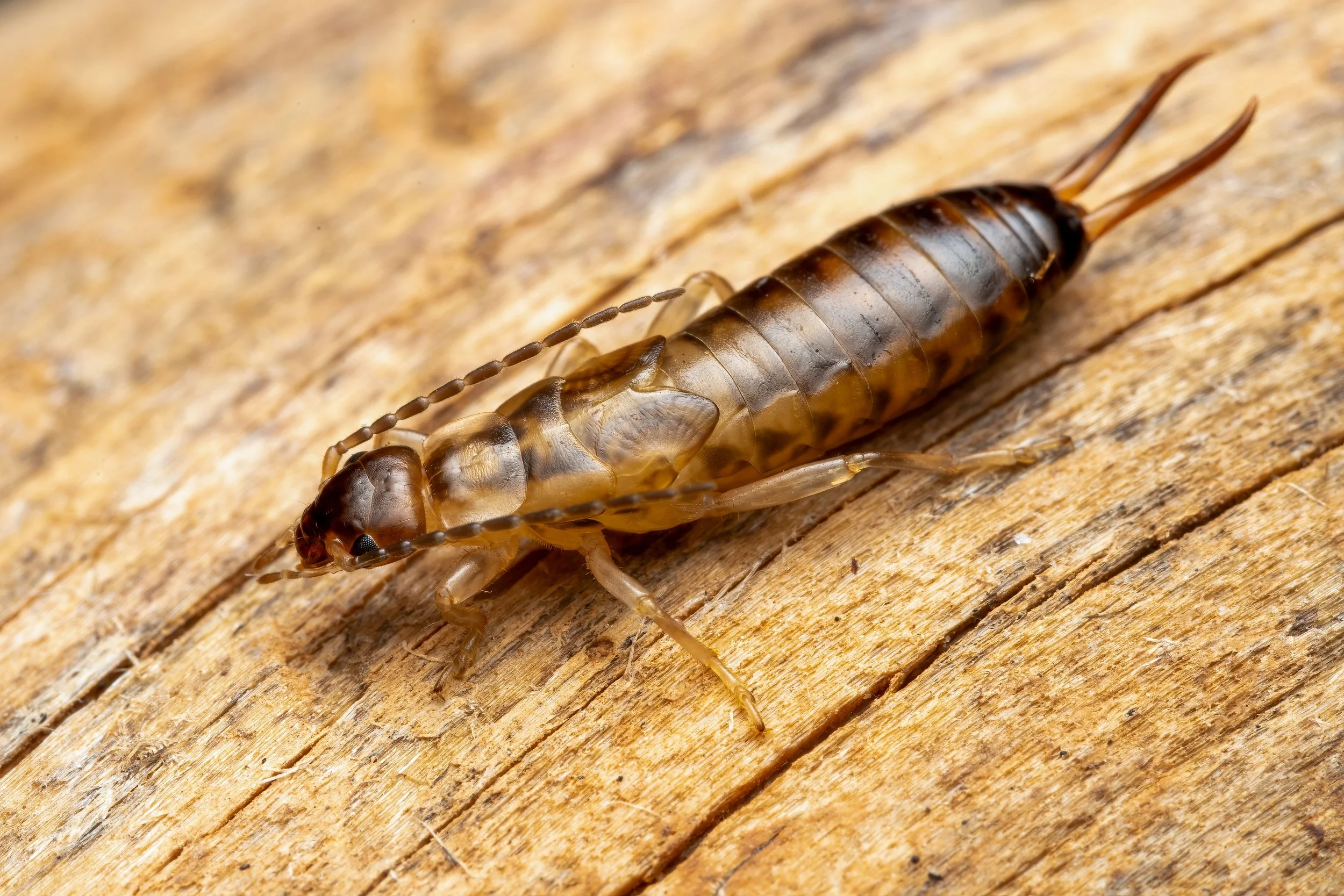
Termites are social insects. A subterranean termite colony contains reproductives, workers, and soldiers, with each group performing a different function. The reproductives establish and expand the colony. Soldiers defend it. Workers perform most of the feeding, tunneling, nest maintenance, grooming, and food distribution—and workers are therefore responsible for the structural damage homeowners associate with termites.
Their food is cellulose, a major structural component of wood and other plant materials. Subterranean termites rely on microorganisms living in their digestive systems to help break cellulose down, after which workers distribute processed food to other members of the colony. This food-sharing behavior is also one of the biological principles behind professional termite bait systems: foraging termites consume bait containing a slow-acting control agent and distribute material through the colony.
Subterranean termites spend most of their lives hidden. Workers are soft-bodied and vulnerable to drying, which is why they normally stay inside soil, wood, or shelter tubes rather than walking openly across exposed surfaces. That concealed behavior explains why a home can have termite activity without homeowners regularly seeing insects.
One of the most noticeable exceptions is a termite swarm. Mature colonies periodically produce winged male and female reproductives called swarmers or alates. They leave the colony, pair, shed their wings, and attempt to establish new colonies. Environmental conditions including temperature, light, and moisture help trigger swarming.
Texas swarm timing varies by species and region. Texas A&M reports that subterranean termite swarming can begin during January and February in South Texas, while Panhandle activity may not occur until April or May. Another Texas A&M homeowner guide notes that the common eastern subterranean termite is typically noticed swarming in March and April. Swarms frequently follow favorable combinations of warmth and moisture, including rainfall.
Because ants also produce winged reproductives, homeowners often confuse the two. Termite swarmers have relatively straight antennae, a body without the sharply pinched waist typical of ants, and two pairs of wings that are approximately equal in length. Winged ants generally have elbowed antennae, a narrow waist, and front wings longer than the rear pair.
Texas homeowners should also understand that “termite” does not refer to a single pest with one treatment strategy. Texas A&M identifies the eastern subterranean termite as the termite most commonly encountered in the state, while other native Reticulitermes species occur across different parts of Texas.
The Formosan subterranean termite, Coptotermes formosanus, is an introduced species of particular concern in parts of Southeast Texas. Texas A&M reports it primarily from the greater Houston-Galveston and Beaumont-Port Arthur areas, although isolated infestations have also been documented elsewhere in the state. It can be transported in infested landscape timbers, railroad ties, wooden pallets, and similar materials. That distinction matters for homeowners specifically searching for information about Formosan termites on the Texas Gulf Coast, because their local risk is substantially different from that of a homeowner in an area where the species has not become established.
Drywood termites are biologically different again. They can establish colonies in relatively dry, sound wood without maintaining the same soil connection required by typical subterranean termites. Texas A&M reports drywood termites primarily in coastal Texas, with documented infestations extending into some inland areas. Their characteristic damage can include small openings through which hard, ridged fecal pellets are pushed from infested wood.
Correct species identification is therefore not academic. Soil treatments designed for subterranean termites address a fundamentally different biology from treatments aimed at drywood colonies living inside structural wood. Texas A&M specifically notes that drywood termites do not nest in the ground and require a different treatment approach.
Why Texas is a Hotspot
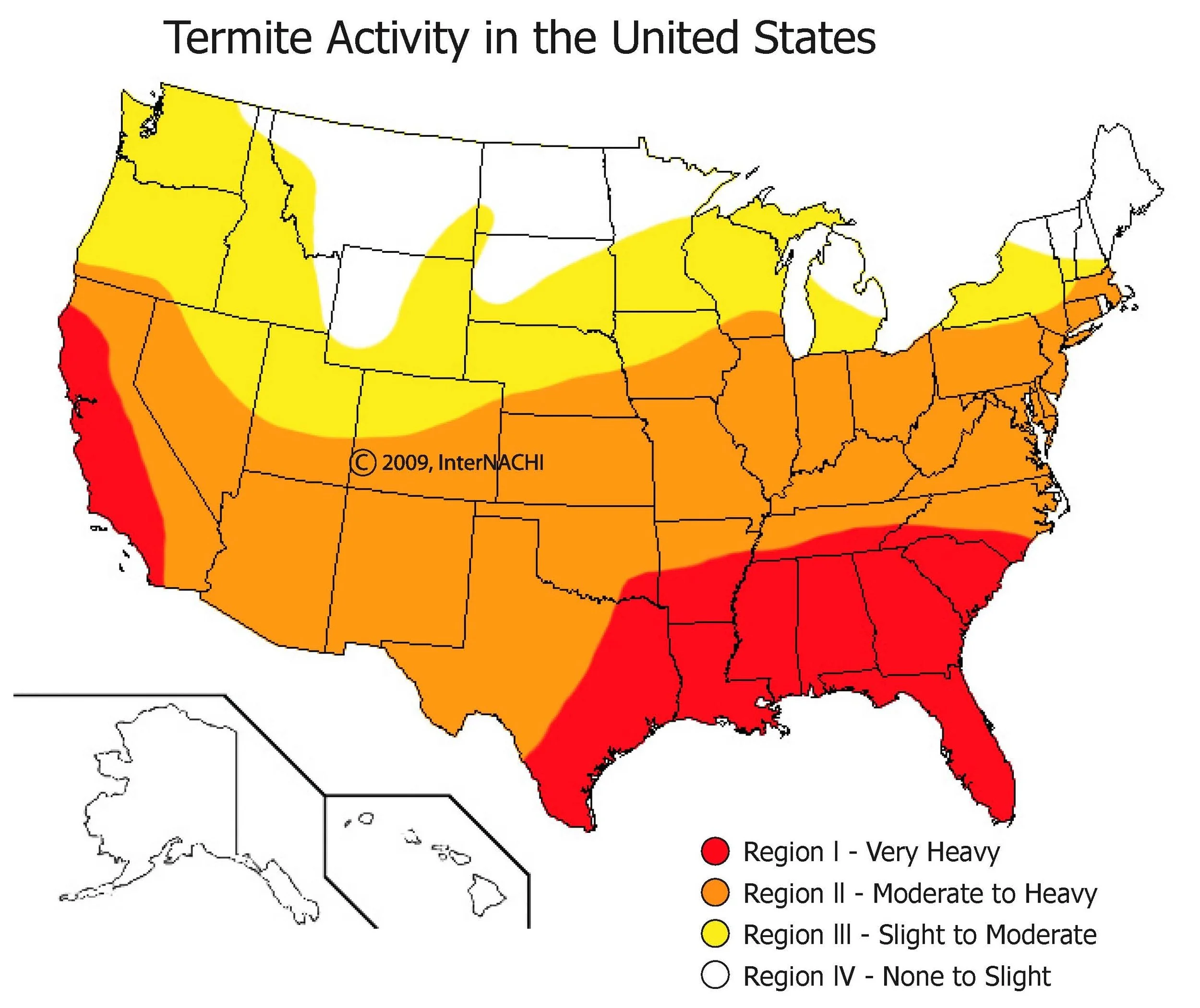
Texas A&M AgriLife identifies Texas as one of the states at high risk for termite infestation, and its entomology program advises homeowners in all areas of Texas to watch for subterranean termites. Native subterranean species occur statewide, although they are reported more frequently in coastal regions.
Part of the explanation is that Texas contains an unusually broad range of environments rather than one uniform “termite climate.” The Gulf strongly influences Southeast Texas humidity and precipitation, while the National Weather Service describes parts of West Texas as having very low humidity. Termite risk therefore changes geographically, but dry regional weather does not eliminate it: subterranean termites primarily need suitable conditions at the soil and building level, where irrigation, landscaping, leaking pipes, roof drainage, condensate, and other moisture sources can create favorable microhabitats. Texas A&M emphasizes temperature and moisture as major environmental controls on subterranean termite colonies.
The Gulf Coast deserves particular attention. Texas A&M reports that subterranean termites are more prevalent in coastal parts of the state and that drywood termites are most commonly associated with coastal and southern Texas. Formosan subterranean termites add another layer of risk in parts of the upper Gulf Coast, especially around Houston-Galveston and Beaumont-Port Arthur.
That does not mean Dallas-Fort Worth, Austin, San Antonio, Central Texas, East Texas, the Panhandle, or West Texas homeowners can disregard termites. Native subterranean species occur broadly across the state, and Texas A&M documents different Reticulitermes species well beyond the Gulf Coast. The timing and intensity of visible activity may differ from one region to another, but the underlying inspection principles remain the same.
Texas weather also influences when homeowners notice termites. Warmth and moisture are among the conditions associated with swarming, and swarm seasons shift across the state because South Texas warms earlier than the Panhandle. A period of spring rain followed by favorable temperatures can therefore make an existing colony suddenly conspicuous even though the colony itself has been developing for years. Texas A&M reports that subterranean colonies typically require roughly two to four years to mature before producing swarmers.
Local construction conditions matter just as much as regional climate. A house with hidden soil-to-wood contact, a leaking plumbing penetration, high soil grade against the foundation, obstructed slab edges, or persistent moisture can present more favorable termite conditions than a well-maintained house a few blocks away. For that reason, a meaningful termite inspection for Texas homes evaluates both evidence of termites and conditions that could facilitate entry or survival.
Texas real-estate rules reinforce the distinction between visible evidence and certainty. The Texas Official Wood Destroying Insect Report covers accessible and visible areas and explicitly states that such an inspection is not a structural-damage report or a guarantee that hidden wood-destroying insects are absent. If visible evidence of infestation is found, additional evaluation may be needed to determine the extent of damage.
Professional Treatment Options
Professional termite management should begin with identification and inspection rather than an automatic pesticide application. A qualified inspector needs to determine the termite type, locate visible activity and likely entry routes, identify moisture or structural conditions that contributed to the problem, and account for construction features that affect treatment access. A strategy appropriate for native subterranean termites may not be the correct approach for drywood termites, and even two subterranean-termite infestations can require different application patterns because of foundation design and site conditions.
For a suspected infestation, Texas A&M advises professional treatment in most homes because effective termite control requires specialized knowledge, equipment, and application techniques. The EPA likewise states that termiticide application is generally best performed by trained pest-management professionals and warns that incorrectly applied soil treatments can fail to protect a structure or contaminate surrounding areas.
In Texas, structural pest-control businesses and individuals are regulated by the Texas Department of Agriculture’s Structural Pest Control Service. Termite control is a specific licensing category covering the inspection and control of termites and other wood-destroying organisms, apart from structural fumigation, which is a separate category. Homeowners considering professional termite treatment in Texas can also check TDA’s current-license records rather than relying only on advertising claims.
Liquid soil-applied termiticides are a standard option for subterranean termites. The objective is to treat soil at locations through which termites are likely to travel between the colony and the structure. Depending on the building and pesticide label, professional work can involve trenching beside a foundation, treating soil, or making carefully placed applications through slabs or other construction elements. EPA identifies soil-applied barrier treatments as one of the most common termite-control approaches.
Modern subterranean-termite treatments may use materials that termites do not readily detect or avoid, allowing exposed workers to continue moving through treated zones. Texas A&M research and guidance report strong performance from non-repellent soil treatments and note that soil type can influence termiticide performance—an especially relevant consideration in Texas, where soil characteristics vary substantially by location. A licensed applicator should select and apply any termiticide according to its current EPA-approved label rather than according to a generic homeowner recipe. EPA registration requires structural-protection data for termiticides and restricts use to labeled directions.
For homeowners comparing subterranean termite treatment in Texas, termite baiting systems are the principal alternative to a conventional liquid soil treatment. Bait stations use cellulose or another termite food source combined with a slow-acting control agent. Foraging workers feed on the material and can distribute it through the colony. EPA recognizes termite baits as an approved control method, and Texas A&M reports that properly managed bait programs have been used successfully against persistent infestations.
Baits and liquid treatments should not be viewed as universally “better” or “worse.” Texas A&M explicitly notes advantages to both. Soil treatments can provide rapid, persistent protection when properly applied, while bait systems use small, precisely placed amounts of pesticide and are useful where conventional soil treatment is undesirable or difficult. Bait protection, however, depends on continued monitoring and maintenance because colonies can eventually reinvade from surrounding areas after a bait program is discontinued.
Wood treatments, including borate-based treatments, have an important but narrower role. Texas A&M reports that treating accessible structural wood with borates can prevent termite feeding and wood decay, with the most complete applications generally occurring before or during construction when framing is exposed. Applying borates only to accessible wood in an existing finished house does not create complete protection from subterranean termites because much of the structure cannot be reached.
Physical barriers can also be incorporated during construction. Texas A&M describes properly installed stainless-steel mesh and other mechanical barriers as methods of reducing termite entry, while EPA recognizes termiticide-impregnated building materials and wood treatments among approved preventive approaches. These measures are most practical when they are designed into a building rather than retrofitted after infestation.
Drywood termites require a different assessment. Small, accessible colonies may sometimes be addressed by removing infested wood or by localized professional treatment. More extensive drywood termite infestations can require structural fumigation because the insects may be distributed through inaccessible wood without a soil connection. Texas A&M’s termite-control guidance identifies fumigation as a treatment used for drywood termites and notes that fumigation requires additional licensing and certification.
Homeowners should be cautious about relying on surface sprays, store-bought perimeter applications, or treatment of only the visible termite location. Texas A&M notes that termites can enter a structure at locations far removed from where damage or swarmers are discovered, meaning a narrowly targeted spot treatment may leave other routes unaddressed. Do-it-yourself methods are therefore better suited to limited situations and small, lower-value structures than to comprehensive protection of an occupied home.
Before approving professional treatment, Texas homeowners have useful regulatory protections. The Texas Department of Agriculture states that a termite-treatment proposal must include written disclosure information such as a diagram showing areas to be treated and visible activity, warranty or guarantee terms, the pesticide label when applicable, and either the proposed liquid-treatment concentration or information about the bait system.
That paperwork matters. Treatment specifications and warranties can vary significantly even when companies propose the same general control method. Homeowners should compare what portions of the structure are covered, what monitoring or renewal is required, what happens if termites return, whether retreatment is included, and whether repair coverage is part of the agreement. TDA specifically advises consumers to review proposed treatments, pesticide labels, warranties, and guarantees before selecting a service.
The practical goal is not to select the most aggressive-looking treatment. It is to match the intervention to the termite species, building design, activity pattern, and conditions around the structure. A sound termite-management program combines professional control where needed with moisture correction, removal of unnecessary wood-to-soil contact, improved inspection access, and continuing vigilance for new activity. That approach is consistent with Texas A&M and EPA guidance emphasizing identification, structural conditions, appropriate treatment selection, and properly applied registered control methods.
Conclusion
Termites are part of the Texas environment, but an infestation is manageable when identification, moisture correction, structural maintenance, and professional control are handled systematically. Watch for indoor swarmers, discarded wings, mud tubes, and wood damage; reduce soil-to-wood contact; correct leaks and drainage problems; and keep the foundation visible enough to inspect. If you find credible evidence of activity, arrange a termite inspection for your Texas home rather than relying on surface sprays or guessing at the species. A Texas-licensed termite professional can determine whether you are dealing with native subterranean, Formosan, or drywood termites and recommend a treatment that matches the structure and infestation. For homeowners deciding how to prevent termites in Texas, routine inspection and prompt correction of conducive conditions remain the most practical first line of defense.