
Roof Problems We Commonly Find During Central Texas Home Inspections
A roof can look perfectly acceptable from the street and still have defects that matter to a buyer or homeowner. In Central Texas, hail, strong thunderstorm winds, normal weathering, and previous repairs can leave problems that are difficult to recognize from the ground. Texas inspection standards specifically require inspectors to report visible roof-covering deficiencies, evidence of water penetration, and evidence of previous roof repairs.
That makes the roof an important part of any home inspection in New Braunfels and throughout the Austin–San Antonio corridor.
Hail Damage Is Not Always Obvious
Hail impacts can bruise or otherwise damage asphalt shingles and contribute to the loss of mineral granules embedded in the surface. Depending on the severity, the visible result may be an impact mark or localized granule loss rather than a missing or broken shingle. Hail is a recognized risk to residential roofs, and asphalt-shingle hail performance is an active area of building-science research.
Those conditions can be difficult to see from a driveway or sidewalk. In fact, Texas standards do not require a home inspector to identify latent, or hidden, hail damage. A roof inspection can document observable conditions, but suspected storm damage may warrant further evaluation by a qualified roofing professional.
Wind Damage Can Happen Without a Major Hailstorm
Roof problems are not limited to hail damage. Strong winds can leave shingles lifted, creased, displaced, or missing. Roofing-industry guidance also notes that proper starter-strip sealant helps prevent shingle blow-offs and water penetration, illustrating why secure adhesion matters during high winds.
Wind damage may affect only a small portion of a roof, so storm-related defects can exist even when there was no major hailstorm and the roof still looks generally intact from the street.
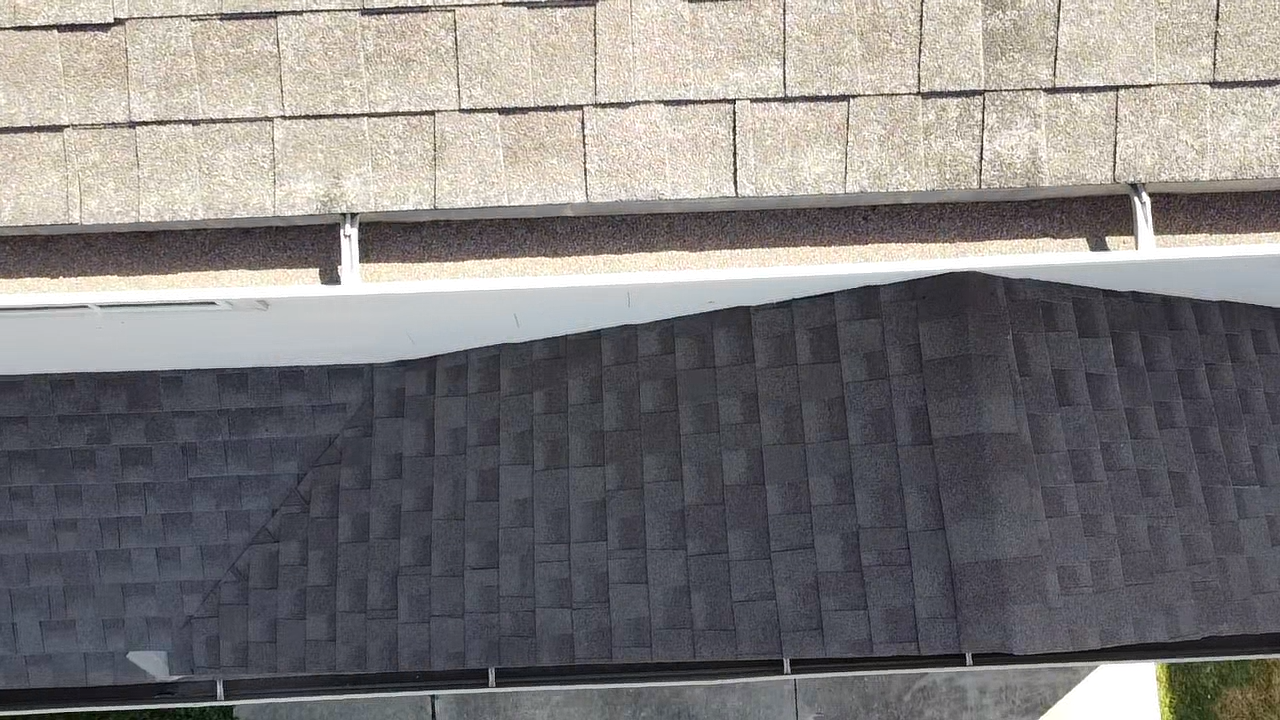
Granules filling a gutter
Granule Loss Needs Context
The granules on asphalt shingles form a weather-resistant mineral surface over the asphalt coating. Some granule loss can occur as shingles age and weather, so finding loose granules does not automatically mean the roof has failed. The Asphalt Roofing Manufacturers Association recommends watching for excessive loss of protective mineral granules on aging roofs.
Pattern and severity matter. Heavy, concentrated, or localized granule loss—particularly around impact marks, repaired areas, or high-wear locations—can be worth investigating more closely.
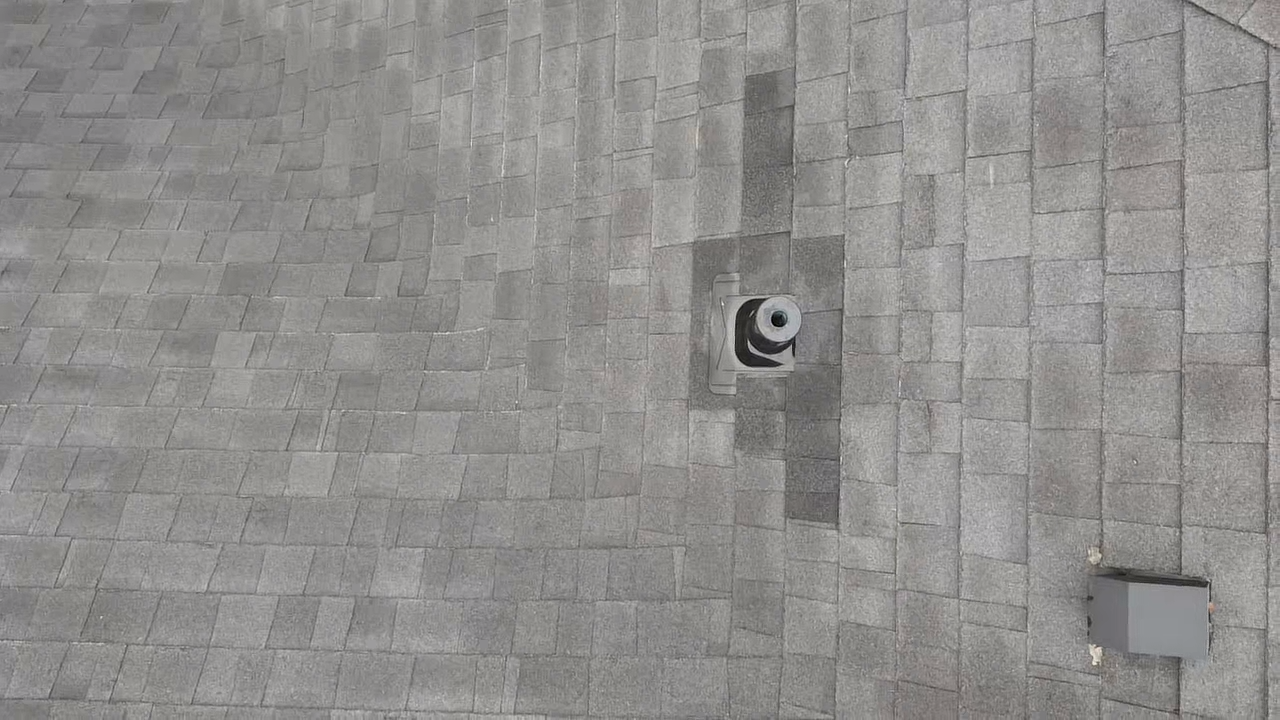
Patch repair around vent
Patch Repairs Are Not Automatically a Problem
During a Central Texas home inspection, we frequently encounter patched shingles or other evidence of previous roof repairs. A repair by itself is not necessarily a defect.
What matters is the quality of the work and the surrounding condition. Mismatched materials, exposed or poorly placed fasteners, loose flashing, improper installation, or repeated repairs in the same area can identify locations that deserve closer attention. Texas standards specifically call for inspectors to report previous roof repairs and visible deficiencies in fasteners, adhesion, roofing materials, flashing, and penetrations.
Leaks Often Leave Clues, Not Drips
Roof leaks are not always obvious on inspection day. Possible clues include staining, moisture-related damage, deteriorated roof decking, attic evidence, or signs of previous repairs. Industry guidance recommends checking the underside of the roof deck and rafters for stains or wet areas, while Texas standards require inspectors to report observed evidence of water penetration.
A stain does not automatically mean there is an active leak. It may reflect an older problem that was repaired. The goal is to document observable evidence and explain when further evaluation is appropriate.
What a Home Inspector Can—and Cannot—Determine
A home inspection is a limited visual evaluation of accessible systems and components—not a roofing certification, warranty, or insurance inspection. Under Texas standards, inspectors are not required to determine a roof’s remaining life expectancy, identify hidden hail damage, or exhaustively locate every defect or point of water penetration.
When visible conditions suggest significant storm damage, installation problems, deterioration, or questionable repairs, evaluation by a qualified roofing professional may be the appropriate next step.
Texas Property Inspections, LLC serves New Braunfels and communities throughout the Austin–San Antonio corridor. A thorough home inspection can help buyers better understand the condition of the roof and other major systems before purchasing a home.